
EU Textile Regulation 2026: What it really means for fair fashion brands
Advertisement
EU Textile Regulation 2026 This heralds a new era for the European fashion industry and forces companies to view sustainability not as a marketing option, but as a legal necessity.
In 2026, key provisions of the Ecodesign Regulation (ESPR) will come into force, sealing the end of the throwaway mentality and making transparency the top priority.
This regulatory shift marks the transition from voluntary self-commitments to binding standards that cover the entire life cycle of a garment.
For fair fashion pioneers, this means on the one hand a tailwind from fair competitive conditions and on the other hand new bureaucratic hurdles that must be cleverly overcome.
What is the Ecodesign Regulation and who will it affect first?
The EU Textile Regulation 2026 is largely based on the regulation for sustainable products, which aims to make textiles more durable and recyclable.
From July 19, 2026, the historic ban on the destruction of unsold clothing and shoes will apply to large companies throughout the European Union.
This law prohibits the practice of simply shredding or burning returns or excess stock in order to maintain brand exclusivity or reduce storage costs.
It forces brands to plan their production more precisely and to implement real solutions for the end of the product life cycle.
Why is the ban on destruction a milestone for the industry?
In the past, it was more economically attractive for many fast-fashion giants to destroy new goods than to sell them at a discount or recycle them.
The EU Textile Regulation 2026 Put an end to this madness and instead demand detailed reports on the quantities disposed of and the reasons for them.
This transparency requirement makes the ecological footprint of overproduction measurable for the first time and visible to investors and consumers alike.
This creates immense pressure to shift business models from quantity to quality and circular systems such as resale or repair.
++ 10 timeless clothing items for your sustainable wardrobe
What exceptions apply to small fair fashion labels?
Micro and small businesses are currently exempt from this special destruction ban in order to avoid burdening them with excessive bureaucracy.
Nevertheless, niche brands should also... EU Textile Regulation 2026 Use it as a guideline, as medium-sized companies will also fall under these strict rules from 2030 onwards.
The market will align itself with the new standards anyway, which means that certified sustainability will become the standard entry ticket to the EU internal market.
Those who already produce circularly today secure a long-term competitive advantage over those who are only playing for time.
How does the Digital Product Passport (DPP) work in practice?
A key element of the EU Textile Regulation 2026 is the introduction of the Digital Product Passport, which is expected to become mandatory for textiles from the middle of the year.
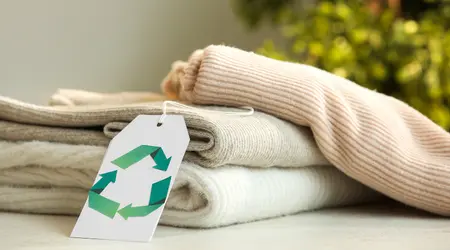
Each garment receives a digital identity, which can be accessed via QR code and provides information about material origin, repairability and recyclability.
This passport is intended to ensure that waste disposal companies know exactly which fibers a part consists of, in order to enable high-quality fiber-to-fiber recycling.
He is ending the era of greenwashing, as claims about sustainability now need to be backed up by hard, digitally stored data.
See also: Fair fashion for pregnant women: Sustainable throughout pregnancy
Why is transparency the new currency in the fashion industry?
Thanks to the EU Textile Regulation 2026 Customers in the store can immediately see whether a shirt was produced under fair conditions or how much CO2 its production consumed.
This radical transparency plays into the hands of fair fashion brands, which often already disclose their supply chains all the way back to the cotton plantation.
The challenge lies in the technical implementation: brands must upgrade their data management systems so that they can provide this information completely and in a tamper-proof manner.
It's no longer just about the design, but about the digital integrity of each individual product.
See more: How you can shop sustainably, regardless of the season
How do recycling companies benefit from the new data situation?
So far, 99% of the used clothing ends up in thermal recycling or in landfills because the exact composition of the mixed fabrics is often unknown or incorrectly declared.
The EU Textile Regulation 2026 It provides the "blueprint" for recycling directly on the product, which massively increases sorting efficiency.
If a recycler knows that a sweater is made from 100% certified organic cotton, they can spin it into high-quality new yarn.
This cycle is key to reducing resource consumption and finally makes fashion part of the solution.
Why will Extended Producer Responsibility (EPR) be a game changer?
The EU Textile Regulation 2026 It stipulates that manufacturers must bear the financial responsibility for the disposal and recycling of their products that they place on the market.
These fees are „eco-modulated“, which means: the more sustainable and durable a product is, the lower the fees for the brand.
This creates a direct financial incentive for durable design and the avoidance of harmful chemicals or difficult-to-separate fiber blends.
Suddenly, "cheap production" becomes expensive for companies when the high disposal costs are added at the end of the bill.
What role does longevity play in the new EU law?
Products will in future have to meet minimum requirements for tear resistance, colorfastness and dimensional stability in order to be allowed on the EU market at all.
The EU Textile Regulation 2026 This actively combats planned obsolescence, where clothing becomes stretched out or develops holes after just a few washes.
This is a victory for fair fashion labels, as their often higher prices are now justified by a legally guaranteed lifespan.
Quality becomes the legal standard, which significantly reduces the unfair price pressure caused by inferior mass-produced goods.
What does intelligent preparation for the year 2026 look like?
Successful brands are already investing in „Design for Circularity“ by attaching buttons and zippers in such a way that they can be easily removed.
The EU Textile Regulation 2026 rewards creative minds who think of fashion as a system that must never end up in the trash.
A practical example is the switch to mono-materials, i.e., garments made from only one type of fiber that can be recycled without loss of quality.
This strategic decision will not only save on EPR fees in the future, but also secure access to sought-after recyclates.
Which analogy best describes the transformation of the industry?
The fashion industry can be thought of as a Ocean liners on a collision course imagine someone who is now forced by EU regulations to drop anchor and change course abruptly.
The EU Textile Regulation 2026 is the new compass that shows the way out of the polluted waters of fast fashion.
Without these hard guardrails, the ship would continue to head unchecked towards ecological catastrophe.
Now there is finally a binding timetable for everyone, ensuring that only future-proof ships are allowed to dock in EU ports.
What does current research say about the effectiveness of these laws?
According to a study by European Environment Agency (EEA) From the year 2025, the textile industry is responsible for approximately 20% of global clean water pollution.
The researchers emphasize that only through binding design specifications, such as those proposed by the EU Textile Regulation 2026 provides for a significant reduction in these values.
This scientific evidence shows that the politicians are not acting arbitrarily, but are reacting to an existential environmental threat.
Will these measures be sufficient to fully decarbonize the fashion industry within a generation?
Overview of the pillars of EU textile regulation 2026
| measure | Entry into force (large companies) | Core objective | Advantage for Fair Fashion |
| prohibition of destruction | July 19, 2026 | Stop the disposal of new goods | Greater market transparency |
| Digital Product Passport | Mid-2026 | Complete traceability | Proof of sustainability |
| Ecomodulated EPR | Gradually from 2026 | polluter pays principle for waste disposal | Financial relief for organic materials |
| Minimum shelf life | From 2026 (phased plan) | The end of throwaway quality | Quality becomes the competitive standard |
| Recycling rate | Targets until 2030 | Promote the use of recycled fibers | Market value for used clothing increases |
In summary, it can be said that the EU Textile Regulation 2026 heralds the end of the unregulated fast fashion era and makes true sustainability the law.
While the ban on destruction and the digital product passport initially entail administrative effort, in the long term they create the basis for a fair circular economy.
Fair fashion brands that proactively implement these changes will emerge as winners from this transformation.
The era of empty promises is over; now data, durability, and genuine responsibility for every piece produced are what count.
Do you believe that the Digital Product Passport will sustainably change your purchasing behavior in the future? Share your experience in the comments!
Frequently Asked Questions
Will the EU textile regulation 2026 also apply to imports from Asia?
Yes, the regulation applies to all physical goods placed on the EU internal market, regardless of where they were manufactured.
This ensures that European brands are not disadvantaged by cheap, unregulated imports.
Do even small boutiques now have to display QR codes?
For the time being, the main responsibility lies with the manufacturers and importers (the distributors).
However, retailers must ensure that the products they sell comply with the information requirements once the transition periods have expired.
What happens to clothing that cannot be recycled?
Through the EU Textile Regulation 2026 And the eco-modulated fees will make it extremely expensive for brands to offer such products.
The goal is to completely eliminate these materials from the market in the long term through design regulations.
How secure is the data in the Digital Product Passport?
The EU is working on decentralized (blockchain-based) systems to ensure that the data is tamper-proof.
This is intended to prevent companies from making false statements about certifications or countries of origin.
Will the new laws make clothing more expensive?
It is possible that the prices for fast fashion will rise, as the hidden environmental costs now have to be factored in.
High-quality fair fashion products, on the other hand, could become relatively more attractive, as they benefit from lower disposal fees.