
Digital product passports in fashion: More transparency or just new marketing?

Advertisement
Digital product passports in fashion In 2026, these are no longer a distant vision of the future, but a regulatory reality that is fundamentally changing the entire European textile landscape.
While skeptics initially suspected it was merely a new marketing tool, the technology has proven to be the sharpest weapon against greenwashing and opaque supply chains.
This new system demands radical openness from brands, going far beyond previous sustainability reports.
In this article, we examine whether this transparency actually reaches the consumer or whether it merely forms the next digital facade.
Strategic Overview
- Regulatory framework: The EU Ecodesign Regulation (ESPR) makes the passport mandatory for market access.
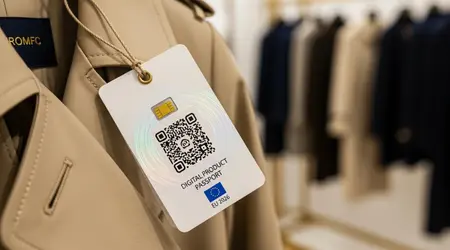
- Technological basis: QR codes or NFC chips link physical garments to a counterfeit-proof cloud database.
- Consumer benefits: Direct access to repair instructions, material origin and ecological footprint via smartphone scan.
- Challenges: High data costs for manufacturers and the risk of information overload for buyers.
What exactly do digital product passports offer in the fashion industry?
Digital product passports in fashion Today, they function as the "digital twin" of every garment and store information throughout its entire life cycle.
In an industry that has benefited from anonymity in production for years, this tool is now effectively breaking down the walls of silence.
Each passport contains verified data on the origin of the fiber, the chemicals used, and the social conditions in the factories.
Today, shoppers don't just decide based on appearance; they scan the truth behind the label.
How does the technology behind the QR code work?
The technical implementation is usually based on a decentralized architecture, which ensures that data cannot be manipulated retrospectively.
Brands use standardized interfaces to transfer information from suppliers directly into the Digital product passports in fashion to integrate.
For the end user, the process remains simple: A quick scan leads to an interactive interface that visualizes complex supply chains.
This prevents brands from hiding behind vague advertising promises, as every data point must be verified.
++ Greenwashing 2.0: How fashion brands will rebrand sustainability in 2026
What data are companies legally required to disclose?
The European Union requires that key environmental indicators such as the CO2 footprint and water consumption per kilogram of textile be clearly stated.
Information on repairability and take-back systems is now also an integral part of a product's digital file.
This forces designers to think about the end of the product's life as early as the sketch stage.
A circular economy model thus transforms from a voluntary option into a measurable, legal obligation for every fashion house.
Is this new transparency a genuine change of thinking or clever marketing?
The debate whether Digital product passports in fashion Whether data is just another label is a hotly debated topic. Critics argue that data alone cannot make a bad product good or stop overconsumption.
Nevertheless, it can be observed that the mere existence of this data strengthens consumer confidence.
A recent study by Strategy& (PwC) shows that 49% of buyers are more likely to purchase if the origin can be verified.
See also: How you can shop sustainably, regardless of the season
How does this passport differ from previous greenwashing practices?
Previously, a green leaf on the label was enough to suggest sustainability without ever having to provide proof.
With the digital passport, this scope for creative interpretation has now almost completely disappeared.
Since the data is accessible to both authorities and consumers, draconian fines are threatened for false information.
Transparency is therefore no longer just an advertising promise, but a hard and fast condition for marketability.
See more: Sustainable swimwear: Swimming in an environmentally friendly way
Why will consumers trust digital data more than commercials in 2026?
An analog world full of glossy brochures has eroded people's trust, while digital verification allows for objective testing.
Today, buyers compare passports from different brands as naturally as they used to compare prices.
Isn't it paradoxical that we need technology to guarantee humanity in production?
Here, technology serves as a necessary filter to separate the wheat from the chaff in fair production.
What are the advantages of a circular economy?
Digital product passports in fashion are the crucial catalyst for a functioning circular textile economy in 2026.
Without precise information about material compositions, high-quality recycling was often a matter of pure luck in the past.
Today, sorting systems can instantly tell, thanks to digital scanning, whether a sweater is made of 100% % wool or a blended fabric.
This significantly increases recycling rates and reduces the need for new, environmentally harmful raw materials.
How do repair services and second-hand platforms benefit?
Repair shops can access specific material instructions and original spare parts directly via the passport, which extends the lifespan of the clothing.
The passport also provides security in the resale process, as it confirms the authenticity and quality of the item.
A used coat loses less value if its entire history is fully documented. The digital passport thus transforms clothing from a disposable item into a valuable asset with its own unique story.
What does this mean for the waste management of the future?
Waste is really just a raw material in the wrong place, and the digital passport functions as a navigation system.
Municipal waste disposal companies use the data to direct textiles to the correct recycling channels.
The vision of a zero-waste fashion industry is thus brought within reach, as every gram of fabric is tracked.
We are currently experiencing a shift from linear destruction to intelligent resource conservation.
Current market data on transparency in fashion (as of 2026)
| indicator | Value / Share | Impact on the market |
| Willingness to buy when there is transparency | 74 % | Customers pay a premium for verifiable fairness. |
| Recycling rate based on DPP data | +35 % | Sorting accuracy increases through digital recognition. |
| Fines for greenwashing | up to 4 % revenue | Legal certainty through the Green Claims Directive. |
| Consumer awareness | 53 % | Over half of the buyers are familiar with the product passport. |
Digital product passports in fashion They mark the end of a lack of transparency and force the industry to a level of honesty that was unthinkable just a few years ago.
It's no longer about who runs the loudest campaign, but about who delivers the cleanest data.
The fashion of tomorrow will not only be worn, but also interpreted as a document of our responsibility towards the environment and humanity.
If we jointly establish scanning as the standard, transparency will become the new normal and marketing will become secondary.
What do you think of this digital revolution on clothes hangers? Share your experiences with the new scans in our comments!
Frequently Asked Questions
What happens if the QR code on the label fades or is cut off?
In this case, many manufacturers offer a digital search function via their app or website. Furthermore, by 2026, more and more durable NFC tags will be sewn into seams, which will still be readable even after 50 wash cycles.
Is my personal data stored in my digital passport?
No, the passport only stores product-related information and not buyer data. It serves to ensure supply chain transparency and not to monitor individual consumer behavior.
Will the introduction of the passport cost the end consumer more money?
The initial system costs can be slightly passed on to the price, but in the long term, costs decrease due to more efficient recycling processes.
In addition, buyers save money due to the greater durability and better repairability of their clothing.