
The connection between zero-waste lifestyle and reducing the CO2 footprint.
Advertisement
The Zero-waste lifestyle It is not just a trend, but a conscious lifestyle that aims to minimize waste and use resources sustainably.
This approach contributes significantly to CO2 reduction by prioritizing environmentally conscious choices. By avoiding single-use products and opting for reusable alternatives, the ecological footprint reduced.
Companies like Maison Naturelle have set themselves the goal of becoming more sustainable by 2025 and expanding their... CO2 footprint to drastically reduce it.
The shift in consumer behavior, true to the motto "Less is more", shows that a sustainable lifestyle is possible and simultaneously contributes to reducing plastic waste and CO2 emissions.
What is the zero-waste lifestyle?
The Zero-waste lifestyle is an innovative approach that focuses on the principles of Waste prevention The focus is on minimizing waste in all areas of life and thereby reducing environmental impact. A core aspect of this lifestyle is conscious consumption, which has both social and positive consequences. Responsibility as well as taking into account the protection of natural resources.
A key component of the zero-waste principle is the five Rs: Refuse, Reduce, Reuse, Recycle, and Rot. These principles offer clear guidance for reducing one's ecological footprint:
| principle | Description |
|---|---|
| Refuse | Rejection of single-use plastics and unnecessary packaging, e.g. through the use of reusable coffee cups. |
| Reduce | Minimizing plastic waste through a conscious and minimalist lifestyle. |
| Reuse | Using reusable products such as straws and to-go cups to conserve resources. |
| Recycle | Recycling all unavoidable waste, e.g. by converting old T-shirts into cleaning rags. |
| Red | Composting organic waste to improve soil quality. |
The practice of Zero Waste also offers numerous AdvantagesThis includes the savings on everyday costs. Zero-waste advocates can save up to €5,000 annually, which adds up to as much as €50,000 over a decade. Furthermore, this lifestyle promotes healthy eating habits that rely less on processed foods and reduces CO2 emissions through the consumption of locally produced, unpackaged food.
The importance of waste prevention for the environment
Waste prevention plays a central role in the protection of Environment and is crucial for reducing our ecological footprint. By minimizing the amount of waste that ends up in landfills, we reduce the pollutant emissions resulting from waste treatment. The Austrian approach to Waste prevention It aims to reduce waste and promote recycling. This contributes to a healthy and sustainable future. Environment at.
The Waste Framework Directive Directive 2008/98/EC and the Waste Management Act form the basis for the implementation of waste prevention programs in various countries. A comprehensive waste prevention program includes numerous measures designed to incentivize, inspire, and inform communities. These programs also integrate support for municipalities and cities, which are provided with a wide range of resources by the Federal Environment Agency, including guides and online seminars.
The initiative Zero Waste Europe, which has been active since 2013, underlines the growing movement for the responsible use of resources. In many sectors, including the hotel industry, there is still considerable potential for improvement. Waste preventionHotels produce an average of between 233 and 3,653 kg of waste per tourist annually. The same applies to the excessive consumption of paper in the form of booking confirmations. Digitization strategies can be helpful in minimizing waste.
Through these collective efforts, waste prevention can not only change individual lifestyles but also have a far-reaching impact on society as a whole. Every step towards reducing and reusing resources contributes to a smaller ecological footprint and thus improves our lives. Environment sustainable.
Zero Waste CO2 Reduction: How does that work?
The connection between a Zero-waste lifestyle and the CO2 reduction This is undeniable. By avoiding waste and using resources efficiently, individuals and communities actively contribute to reducing greenhouse gas emissions. Studies show that 62% of global greenhouse gas emissions come from the extraction and production of goods. Changes in everyday life can be practical and effective.
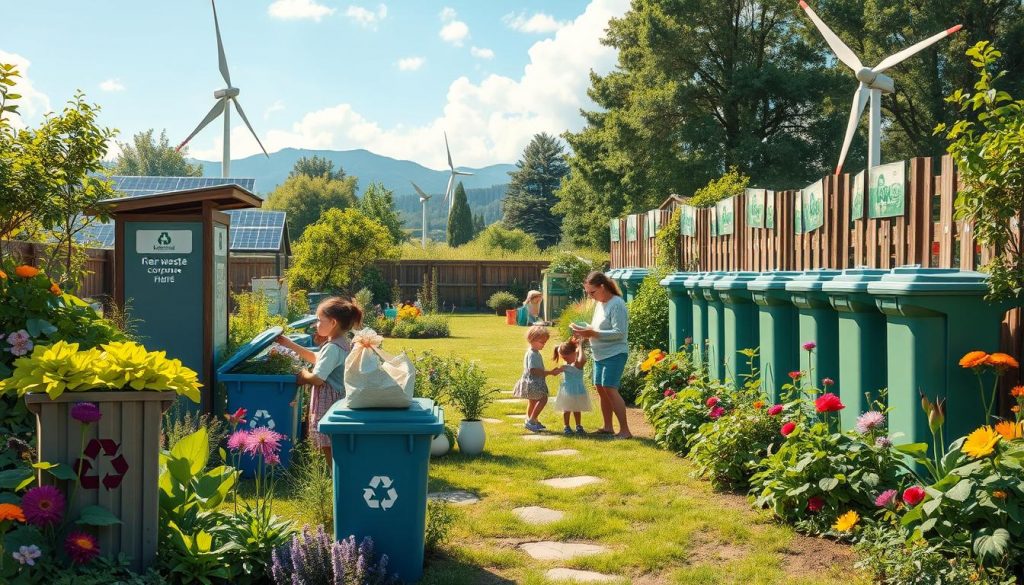
- Use of reusable containers for food and drinks.
- Buying unpackaged food to reduce the amount of plastic waste.
- Choosing products made from recycled materials that require less energy to produce.
Reducing waste not only lowers greenhouse gases but also conserves valuable resources. The production of new goods causes emissions at every stage, from raw material extraction to manufacturing. Data shows that using recycled materials requires up to two-thirds less energy, which significantly reduces the environmental impact. CO2 reduction further support.
Furthermore, responsible waste management has the potential to significantly reduce global emissions. By considering waste prevention measures and the implementation of recycling and composting, the waste sector could reduce global emissions by up to 20 1 TP3T. The goal of reducing municipal waste by at least 15 1 TP3T by 2030 is being driven by a collective effort.
Overall, it is evident that a committed zero-waste lifestyle is not only individual Advantages It not only offers benefits, but can also make a crucial contribution to global CO2 reduction. Taking small steps in everyday life is crucial for our environment.
The 5 R's of the zero waste lifestyle
The 5 R's The zero-waste lifestyle plays a crucial role in Waste management and make it possible to significantly reduce the ecological footprint. These principles are:
- RefuseAvoiding single-use plastic products and unnecessary packaging. Everyone can contribute to waste reduction through conscious purchasing decisions.
- ReduceFocus on more minimalist consumption. Consumers should try to buy less to reduce plastic waste.
- ReuseUsing reusable products such as cups or bags promotes sustainable resource use.
- RecycleProper waste separation and consideration of reusing materials before disposal are essential. Recycling saves energy and reduces the ecological footprint.
- Red (Composting)Composting organic waste reduces urban waste by up to 30% and returns nutrients to the soil.
The integration of 5 R's Integrating this into everyday life not only reduces waste but also contributes to creating a more environmentally conscious lifestyle. Zero Waste This approach can reduce waste by up to 90% and significantly minimize CO2 emissions.
The ecological footprint and its calculation
The ecological footprint Global land use is a significant measure for assessing the impact of individuals and societies on the environment. It measures the consumption of natural resources and the associated emissions of greenhouse gases such as CO₂. The calculation is done in global hectares (gha) to illustrate how much land is needed to maintain a given individual lifestyle. Awareness of these figures can lead to a more sustainable lifestyle.
Currently, the biologically productive area of the Earth is approximately 12.4 billion hectares, which means that the average ecological footprint The average person's ecological footprint worldwide is approximately 1.6 gha. In Austria, this figure is 6 gha. If the entire global population were to live with this ecological footprint, almost four Earths of Earth's quality would be required. This illustrates the limits of our planet's capacity to bear resources.
The calculation of the ecological footprint is based on four areas of life:
- Nutrition
- Reside
- mobility
- consumption
The online footprint calculator for Austria displays both your personal CO₂ footprint and your ecological footprint. Conscious choices regarding diet and mobility can lead to significant savings in resource consumption. For example, meat-heavy diets generate considerably higher greenhouse gas emissions than plant-based alternatives. Switching to renewable energy also contributes to reducing CO₂ emissions and therefore plays a crucial role in the ecological footprint calculation.
A brief overview of the current figures in comparison:
| criterion | Average ecological footprint (gha) | Required soil |
|---|---|---|
| Worldwide | 1,6 | 1,7 |
| Austria | 6 | almost 4 |
| Earth for a sustainable lifestyle | – | 1,7 |
Earth Overshoot Day, which marks the point at which humanity has exhausted the Earth's resources for the year, fell on July 29th in 2021. Being mindful of one's own ecological footprint can help push this day further back and thus better respect the Earth's limits.
Benefits of a zero-waste lifestyle for the CO2 footprint
The zero-waste lifestyle offers significant advantages. Advantages for the environment, especially for reducing the carbon footprint. Through conscious consumption and the application of the 5 Rs, the CO2 footprint Household waste can be reduced by up to 501 TP3T. This is achieved not only by minimizing waste, but also by promoting a higher level of sustainable practices. Environmental awareness.

Switching to reusable containers can also counteract the use of plastic in the food industry – up to 100 million plastic packages per year. Furthermore, consumers can save over 100 kg of plastic waste per person per year by reducing their consumption, especially of plastic items.
- Recycling and composting can reduce the CO2 emissions of an average household by about 30%.
- Unpackaged purchases protect up to 1,000 kg of CO2 annually.
- Switching to minimalist lifestyles can reduce resource consumption by an average of 25%.
- Retailers who avoid single-use plastics produce at least 1.5 million tons less waste per year.
- 72% Consumers are willing to change their consumption habits to meet the CO2 footprint to lower.
It is estimated that 601,000 tons of waste ending up in landfills could be avoided through effective recycling and reuse. Switching to compostable alternatives could even reduce methane emissions from landfills by up to 501,000 tons. The benefits of a zero-waste lifestyle clearly demonstrate how each of us can actively contribute to this. Environmental awareness can contribute while simultaneously minimizing our carbon footprint.
Finding sustainable alternatives in everyday life
The search for sustainable alternatives is an essential step towards a responsible lifestyle and plays a major role in the zero-waste concept. conscious consumption And by choosing environmentally friendly products, many possibilities can be discovered that significantly reduce the ecological footprint.
One of the most effective methods for avoiding waste is to prioritize shopping at zero-waste stores. These stores offer the opportunity to buy products in bulk or without packaging. self-brought containers Shopping in a way that completely avoids plastic packaging. Choosing reusable products instead of disposable ones can also have a significant impact.
- Use cloth bags instead of plastic bags
- Using stainless steel bottles instead of single-use plastic bottles
- Investing in high-quality and durable products
- By eliminating unnecessary products, waste can be reduced at its source.
By integrating small changes into everyday life, a zero-waste lifestyle is easily achievable. Together with the movement to reduce single-use packaging, we can take decisive steps towards an environmentally conscious future. Further information on implementing sustainable alternatives can be found [here/on our website/etc.]. here.
| measure | Impact on waste |
|---|---|
| Shopping in zero-waste stores | Minimizing plastic packaging |
| Reusable products | Reducing single-use waste |
| Composting | Return of nutrients to the soil |
A sustainable lifestyle not only reduces waste, but also contributes to promoting a healthy, environmentally conscious lifestyle. community In this case, a more conscious choice of products is key to a positive impact on our environment.
The role of community in the zero-waste lifestyle
Implementing a zero-waste lifestyle requires a strong commitment from… communityA lively community can significantly contribute to raising awareness of zero waste. Initiatives such as swap meets and upcycling workshops promote the exchange of knowledge and experience. Such activities strengthen the sense of Responsibility in the community and motivate individuals to consume more consciously.
Another important aspect is the cooperation between citizens, businesses, and the city administration. Studies show that such collaborations in Zero Waste This can lead to a significant reduction in urban waste in cities. It is clear that changes in shopping behavior, such as the use of reusable bags and containers, can have a considerable positive impact on the ecological footprint.
Community events and workshops are effective means of motivating people to participate. These activities not only promote knowledge but also encourage members of the community. communityto work together to bring about change. Therefore, promoting mindful consumption and conscious resource management is an essential part of the zero-waste lifestyle.
Challenges on the road to zero waste
The path to zero waste involves numerous challenges. challenges with itself, which is a comprehensive Changeover in lifestyle. A common obstacle is the limited availability of sustainable products. Many people face the difficulty of finding alternative products that align with the principles of a zero-waste lifestyle. Habits that have been deeply ingrained for years also need to be changed. Changeover It may require time and patient effort.
Furthermore, societal pressure on individuals makes it more difficult to implement sustainable practices. Consumer behavior is often influenced by advertising and norms that reinforce the feeling of constantly having to consume new things. challenges They present a real obstacle, but the positive effects on the environment are a significant incentive to overcome these difficulties.
To achieve this challenges To successfully overcome these challenges, it's important to gradually adopt a zero-waste philosophy. Small changes in daily life can already have a significant impact. It helps to get involved in communities that share similar values and offer mutual support. Through education and engagement, these challenges can not only be mastered but also transformed into opportunities for a more sustainable future.
| Challenge | Description | Strategy for coping |
|---|---|---|
| Product availability | Sustainable products are often hard to find. | Research local markets and online shops. |
| Habits | Breaking established consumption habits is difficult. | Step by step Changeover during shopping and consumption. |
| Societal pressure | Influence of advertising and social norms. | Develop awareness of toxic consumption patterns. |
| Lack of information | Knowledge about sustainable practices It is often missing. | Utilize educational resources and workshops. |
Recognizing and addressing these challenges can encourage people to take the step towards a zero-waste lifestyle. It's about fostering a culture of awareness and... Responsibility to create something that not only offers personal benefits but also contributes to the protection of our planet.
Conclusion
The zero-waste lifestyle presents itself as an effective and necessary means of reducing our carbon footprint. Through targeted waste prevention and more conscious consumption, we can achieve significant progress in environmental protection. Emissions associated with beef production or food packaging vividly demonstrate how important every decision is for our planet.
By choosing sustainable alternatives By making choices like using washable cleaning cloths or homemade cleaning products, we actively contribute to CO2 reduction. At the same time, we promote a circular economy that minimizes waste. Every step towards zero waste is a step towards effectively mitigating global environmental crises.
In summary, it is crucial that we view the zero-waste lifestyle not only as a personal lifestyle, but also as a collective one. ResponsibilityEvery contribution to waste reduction has a positive impact on our ecological footprint and the health of our planet. By acting now, we create a sustainable future for generations to come.
FAQ
What is meant by the zero-waste lifestyle?
The zero-waste lifestyle means minimizing waste and using resources efficiently. It's about making conscious choices that reduce your carbon footprint and protect the environment.
How can I avoid waste in my everyday life?
Waste reduction can be achieved by avoiding single-use packaging, using reusable products, and consciously choosing sustainable goods. Small changes in everyday life, such as using cloth bags or stainless steel bottles, can have a significant impact.
What are the 5 R's of the zero-waste lifestyle?
The 5 R's These practices are Refuse, Reduce, Reuse, Recycle, and Rot (Compost). They help minimize waste and promote a more sustainable lifestyle.
How does a zero-waste lifestyle affect my carbon footprint?
Adopting a zero-waste lifestyle reduces waste, which directly lowers greenhouse gas emissions. Less waste means less strain on the environment and a lower carbon footprint. ecological footprint.
Why is calculating the ecological footprint important?
The ecological footprint shows the impact on the Earth in terms of the consumption of natural resources. A footprint calculator allows you to determine individually how much land is needed to meet your own consumption.
What are the advantages of a zero-waste lifestyle?
A zero-waste lifestyle leads to less waste, reduces CO2 emissions, and promotes a stronger sense of community. Environmental awareness. He can also inspire other people in the community to live sustainably.
How can I find sustainable alternatives?
Sustainable alternatives These benefits can be found through targeted purchasing decisions, such as shopping in zero-waste stores or using reusable materials. Find out about environmentally friendly products and offers in your area.
What role does the community play in the zero-waste lifestyle?
The community plays a crucial role by supporting initiatives such as swap meets or upcycling workshops. Collective efforts increase the motivation to lead a more sustainable life.
What challenges should I expect when adopting a zero-waste lifestyle?
Challenges can include the limited availability of sustainable products, ingrained consumer habits, and social pressure to consume. Commitment and patience are necessary to bring about lasting change.