
Biogas from waste: How municipalities generate sustainable energy
Advertisement
Producing biogas from waste is no longer a vision of the future – it is a practical solution that is already being implemented in many municipalities.
The idea behind it is simple: Energy is generated from organic waste that would be produced anyway.
However, the path to achieving this is fraught with technical, organizational, and societal challenges that must be overcome to fully utilize the potential of this technology.
What is biogas – and how is it produced from waste?
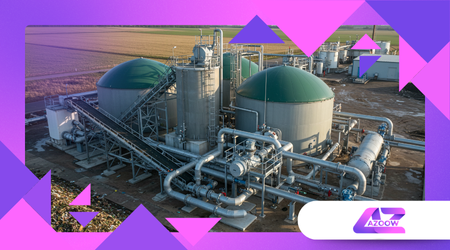
Biogas is produced by the fermentation of organic substances in an oxygen-free environment.
Microorganisms decompose kitchen waste, green waste, manure or sewage sludge, producing a gas mixture consisting mainly of methane and carbon dioxide.
This gas can be used to generate electricity and heat, or processed and fed into the natural gas network.
The use of organic waste from households and the catering industry is particularly interesting. What was once considered waste is now recognized as a valuable resource.
However, in order for the conversion to be efficient, the waste must be collected separately by type and processed in special facilities.
Municipalities play a key role here: they must create the infrastructure, inform citizens and provide incentives for proper waste separation.
Why municipalities should rely on biogas
Municipalities benefit in several ways from the use of biogas from waste. Firstly, they contribute to climate protection by avoiding methane emissions from uncontrolled decomposition and replacing fossil fuels.
Secondly, they create regional added value, as the energy can be generated and used locally. Thirdly, they reduce their disposal costs because organic waste is used for energy recovery instead of being expensively landfilled or incinerated.
For example, the city of Straubing in Bavaria operates a modern biogas plant that processes over 9,000 tons of organic waste annually.
This generates around 2.5 million kilowatt hours of electricity – enough to power about 1,000 households.
At the same time, the generated heat is used for public buildings. A model that could be replicated.
Challenges in implementation
Despite all the advantages, implementing biogas projects is complex. Technical requirements, investment costs, and the need for reliable waste logistics place high demands on municipalities.
In addition, there is a need for public education: the plant can only operate efficiently if organic waste is consistently separated and disposed of correctly.
Another problem: plastic and metal residues in organic waste. They not only disrupt fermentation but also lead to additional processing costs.
Therefore, many municipalities are relying on intensive information campaigns to raise awareness of proper waste separation.
Perspectives for the future
Biogas technology is developing rapidly. New processes allow for more efficient gas production, improved removal of impurities, and more flexible usage options.
The injection of processed biogas into the gas network is particularly exciting – this makes it a real alternative to fossil natural gas.
Furthermore, biogas from waste offers the opportunity to achieve municipal climate goals without having to wait for expensive and long-term measures.
Even with relatively simple means – such as the consistent collection and use of organic waste – significant effects can be achieved.
What is important is the political will to create and operate the necessary infrastructure in the long term.
Promoting citizen participation and acceptance
The acceptance of biogas projects depends entirely on the involvement of the local population.
Municipalities that inform their citizens early on, offer workshops, and take feedback seriously build trust and increase participation. Information campaigns in schools, town hall meetings, or open days at biogas plants are effective ways to spark interest and understanding.
Only if people see the benefits – be it in the form of locally produced energy or reduced waste disposal fees – will they support the project in the long term.
Participation is the key to turning technical projects into successful social models.
Economic opportunities for the region
Biogas from waste offers not only ecological advantages, but also economic potential.
Regional companies benefit from contracts for the construction, maintenance, and operation of the facilities. New jobs are created in waste logistics, plant operation, and technical development.
Farmers can also tap into additional sources of income by using digestate as fertilizer or integrating residual materials into biogas plants.
Furthermore, municipal energy projects keep added value in the region and strengthen the local economy.
These synergistic effects make biogas projects an important pillar of sustainable regional development.
Political framework and funding opportunities
Stable political framework conditions are needed to ensure that biogas from waste is used nationwide.
Funding programs at the state and federal levels, clear legal requirements for waste separation, and investment aid for the construction of facilities are key components. Municipalities need planning certainty to be able to make long-term investments.
Funding for citizen projects and cooperatives also has a positive effect – it promotes personal initiative and democratic participation.
Biogas can only be successfully established as part of the energy transition if the political course is set correctly.
Conclusion: Biogas as an opportunity for municipalities
Biogas from waste is more than just a technical option – it is a strategic tool for sustainable development.
Communities that invest in this technology not only strengthen their energy independence, but also make an active contribution to environmental protection.
The key lies in the combination of technical innovation, clear communication, and consistent implementation on site.
Those who accept these challenges can create real added value from waste – for the environment, for citizens and for the future of energy supply.
FAQ: Frequently asked questions about biogas from waste
How much energy can be extracted from organic waste?
This depends on the quantity and type of waste. On average, approximately 150 to 200 cubic meters of biogas can be produced from one ton of organic waste – enough to generate around 400 kWh of electricity.
Is biogas from waste really climate-friendly?
Yes, because fermentation produces significantly fewer emissions than decomposition in landfills. Furthermore, biogas replaces fossil fuels such as coal or natural gas.
Which types of waste are particularly suitable?
Kitchen waste, green waste, fruit and vegetable scraps, food waste from restaurants and sewage sludge from wastewater treatment are ideal.
What happens to the fermentation residue?
The solid residues from biogas production – so-called digestate – can be used as fertilizer in agriculture.
What role does the citizen play?
A crucial point: Only if citizens properly separate and correctly dispose of their organic waste can the plant operate efficiently and without disruption.
How expensive is the construction of a municipal biogas plant?
Costs vary significantly depending on size and technical specifications. Smaller plants can be implemented starting at around €500,000, while larger municipal projects can easily cost several million euros. However, subsidies and partnerships considerably lower the barrier to entry.
How long does it take for a biogas plant to become economically viable?
The amortization period typically ranges between eight and twelve years – depending on operating costs, the amount of subsidies, and the selling price of the generated energy. However, with optimal operation, the system can become profitable significantly sooner.
Are there any risks or disadvantages to biogas production?
As with any technical system, there are risks – such as odor nuisance, noise emissions, or leaks. However, these can be largely avoided through modern technology and proper maintenance. Careful planning and professional implementation are essential.