
Urban Gardening: Community gardens in German cities
Advertisement
Urban gardening is more than just a trend – it is a movement that is changing the cityscape and offering sustainable solutions for urban space.
Community gardens are springing up all over German cities, offering people the opportunity to actively participate in greening and self-sufficiency.
From Berlin to Munich, more and more urban gardens are growing, in which Sustainability, community, and connection to nature play a central role.
But what does Urban gardening So special? What advantages does it offer, and how can one become part of this movement?
What is urban gardening?
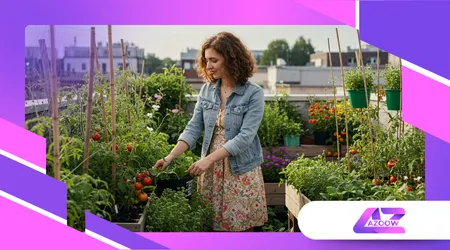
Urban gardening refers to gardening in urban areas – often in the form of community gardens, balcony gardens or even green roof terraces.
The idea behind it is, unused areas to use for growing fruit, vegetables and plants to make the city greener, more sustainable and more livable.
Instead of relying on large agricultural areas, urban gardens make it possible to to produce fresh food directly in the city.
This not only promotes a healthy diet, but also the social interaction between the gardeners.
Why are community gardens so popular?
The increasing popularity of Urban gardening lies in its numerous advantages:
- sustainabilityGrowing local fruits and vegetables reduces transport distances and generates less packaging waste.
- sense of communityPeople from different generations and cultures come together to garden.
- Relaxation in natureEven small green spaces in cities improve the quality of life and offer a A place to retreat from the hectic everyday life.
- Knowledge transferCommunity gardens are often places of learning where knowledge about plant cultivation, sustainability, and healthy eating is shared.
Many German cities have Urban gardening initiatives launched to make fallow land usable and to actively involve citizens.
How does a community garden work?
Community gardens are usually organized by local initiatives or associations. The plots are often publicly accessibleAnd everyone can participate. The organization can take different forms:
- Allotment gardensEach participant receives a small area to cultivate independently.
- Cooperative gardensEveryone works together on a large area and shares the harvest.
- Educational gardensThese serve not only food production but also environmental education.
Many cities support such projects with financial resources or provide suitable areas.
Advantages of urban gardening at a glance
| Advantage | Description |
|---|---|
| sustainability | Reduces CO₂ emissions through local production |
| sense of community | Promotes social contacts and cooperation |
| Self-sufficiency | Enables the cultivation of fresh fruit and vegetables |
| Education | It imparts knowledge about sustainable agriculture |
| urban climate | Reduces heat islands and improves air quality |
Challenges and solutions for urban gardening
1. Limited space in cities
One of the biggest challenges for Urban gardening The main challenge is the lack of suitable land. Many cities are densely built up, and vacant plots are often expensive or already earmarked for development. However, this shortage of space can be overcome through creative approaches.
- Vertical gardening Growing plants on walls or in raised beds allows for cultivation in very small spaces. Climbing plants such as beans or tomatoes thrive on vertical structures.
- Allotment gardens on unused plots of land They offer a flexible solution for urban gardeners. Many cities temporarily provide space for community gardens.
- Mobile gardens in transportable containers These mobile beds are particularly practical for cities where there are no permanent growing areas. They can be set up on vacant lots, parking lots, or even on bodies of water.
Furthermore, there are innovative concepts such as Aquaponics and hydroponics, which enable the cultivation of plants without soil and thus offer a solution for urban gardening even on roofs or indoors.
2. Financing and support
A community garden requires not only commitment, but also financial resources.
Tools, soil, seeds, and irrigation systems are necessary for the successful implementation of a project. However, not everyone has the resources to invest directly in such an undertaking.
- Funding programs from cities and municipalitiesMany municipalities support urban gardening projects through financial grants or provide free land.
- Crowdfunding campaigns can help raise funds from the community by having people financially support the project.
- Cooperations with local businesses offer a way to obtain resources or in-kind donations such as soil, wood for raised beds or water connections.
- Sponsorship models, where citizens or companies finance a raised bed or plot of land and benefit from the harvest.
Careful planning and the search for funding opportunities can help to overcome financial hurdles and to operate an urban gardening project successfully in the long term.
3. Maintenance and long-term use
A community-run garden needs continuous maintenance and regular organizationWithout a clear structure, there is a risk that the project will be abandoned after a short time.
- Clearly distribute responsibilities: Through Shift schedules and fixed task assignments This can prevent conflicts and ensure a smooth process.
- organize educational programs and workshopsTraining courses on plant care, composting, or sustainable irrigation help to strengthen knowledge within the community.
- Long-term contracts with landowners Securing the future of the garden. In many cases, land is only available temporarily, which complicates long-term planning.
- Sustainable irrigation systems Methods such as rainwater harvesting or drip irrigation help to reduce water consumption and manage the garden efficiently.
With a a well-organized community, clear responsibilities, and sustainable planning Urban gardening can not only create green oases in the city in the short term, but also have a positive long-term impact on the cityscape.
Here's how you can participate in urban gardening.
Anyone who is part of the Urban gardening movement Those who wish to become involved can participate in various ways:
- Find existing community gardens – Many cities have online platforms or initiatives that bring gardeners together.
- To create your own garden – A group of committed people can start their own project.
- Use balcony or backyard gardens Urban gardening is possible even on a small scale.
Conclusion: Urban gardening as a green future
Urban gardening is far more than just a hobby – it is a movement that helps to make cities more sustainable, liveable and social.
The growing number of community gardens in German cities shows how important green oases are located in urban areas.
Gardening together not only creates fresh food, but also Neighborhoods, knowledge transfer and ecological benefits.
Everyone can get involved – whether in public spaces, on the balcony, or by supporting existing projects.
As long as people have the desire for a greener city and a stronger community have Urban gardening continue to grow and sustainably change the cityscape.
FAQ – Frequently Asked Questions
1. What is the difference between urban gardening and urban farming?
Urban gardening focuses on Community gardens and smaller private gardens, while urban farming often focuses on commercial food production in the city aims at.
2. Can anyone participate in a community garden?
Yes! Many community gardens are open to all, and there are no special requirements for participation.
3. Which plants are particularly suitable for urban gardening?
Tomatoes, herbs, lettuce, strawberries and zucchini are easy to care for and well suited for urban gardens.
4. How can I find a community garden in my city?
Many cities have Online platforms or local initiatives, which provide information on existing projects.
5. What are the benefits of urban gardening for the urban climate?
It improves the Air quality, reduces heat islands and contributes to improved water retention in the city.