
Cruises and Sustainability: A Critical Review
Advertisement
Cruises and sustainability They are the focus of a heated debate that aims to unite environmental awareness and the desire to travel.
Cruises are booming worldwide, but their ecological footprint raises questions. Luxury liners, which traverse the oceans like floating cities, offer comfort, but at what cost?
In this article, we analyze the challenges and progress of the industry, highlight innovative approaches, and ask: Can cruising ever truly be sustainable?
With a critical eye on current developments, statistics and technologies, we invite you to explore the complex reality behind the holiday dream.
The environmental impact of cruise ships
Cruise ships are notorious for their high CO₂ emissions. A one-week trip produces approximately 1,833 kilograms of CO₂ per passenger. This is equivalent to the annual emissions of a car.
Heavy fuel oil, long the standard fuel, exacerbates the problem. It emits sulfur oxides and particulate matter that pollute the air and sea. Norway has banned heavy fuel oil in its fjords.
Wastewater and waste place additional strain on marine ecosystems. A large ship produces up to 2,100 cubic meters of fresh water daily, some of which is extracted from seawater.
++ Camping and glamping: Sustainable holidays in nature
Arriving and departing by plane often doubles the ecological footprint. Many passengers fly to the departure airports, which further worsens the climate impact.
Fragile ecosystems like the Arctic are particularly vulnerable. Cruises there threaten sensitive habitats, even though stricter regulations already restrict access.
Advances in sustainable cruise technology
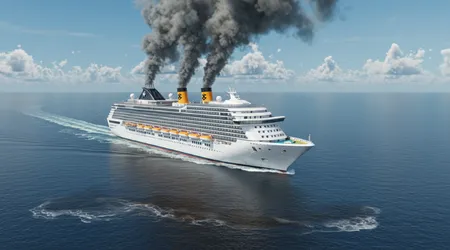
Innovative technologies signal hope. Cruises and sustainability They are increasingly being combined through the use of liquefied natural gas (LNG). LNG almost completely reduces sulfur oxides.
The AIDAnova, awarded the "Blue Angel" ecolabel in 2018, uses LNG and reduces CO₂ emissions by 20 percent. Its sister ship, the AIDAcosma, relies on fuel cells.
TUI Cruises is building on efficient LNG propulsion and exhaust gas cleaning with the Mein Schiff Relax (2025), which will reduce fuel consumption by 30 percent.
See more: How to find local and sustainable travel providers
MSC Cruises is introducing bio-LNG, as was the case with the climate-neutral crossing of the MSC Euribia in 2023. This reduces nitrogen oxides by 85 percent.
Flow-optimized hulls and LED lighting save energy. Such measures demonstrate that technical solutions can significantly reduce environmental impact.
Social and economic challenges
In addition to ecology, social aspects also play a significant role. Cruises and sustainabilityMass tourism in ports like Venice overwhelms local infrastructure and negatively impacts the quality of life for residents.
Seasonal workers on board ships often work under difficult conditions. Fair wages and labor rights are essential to ensure social sustainability.
Port cities benefit economically, but in many places the added value remains low. Cruise passengers often spend their money on board, not locally.
See also: The importance of fair trade activities while traveling
Cultural sensitivity is lacking on some routes. Visits to nature reserves can cause damage through littering and inconsiderate behavior, as is the case in Thai national parks.
Sustainable cruises must strengthen local communities. For example, a portion of the revenue could be invested in local environmental projects to offset the negative impacts.
The role of passengers in the changing landscape
Consumers influence Cruises and sustainability Significantly. Conscious travelers can exert pressure on the industry by choosing sustainable shipping companies.
Smaller ships with fewer passengers, such as those of Hurtigruten, often have a lower environmental impact and offer more authentic experiences.
CO₂ compensation via platforms like Atmosfair makes it possible to offset emissions through climate protection projects. But is this really a solution or just greenwashing?
Passengers can implement simple measures: fewer flights, plastic-free behavior on board, and respectful treatment of the places they visit.
For example, Lisa from Cologne chose a cruise in 2024 with a regional provider that focuses on local products and short routes. The result: fewer emissions, more authenticity.
Conscious travel begins with information. Ask about fuel consumption, waste management, and social standards when booking. Your voice matters!
Regulations and future prospects
Political directives drive Cruises and sustainability Moving forward. The EU plans stricter emission limits for shipping by 2030 in order to reduce air pollution.
Norway will introduce a zero-emissions requirement for cruise ships in the fjords in 2026, forcing the industry to innovate.
The NABU cruise ranking annually assesses shipping companies according to environmental criteria. Such initiatives promote transparency and responsibility within the industry.
Future technologies such as hydrogen or ammonia propulsion could drastically reduce emissions, but are still in their infancy.
Can we imagine a world where cruises are climate-neutral? The technology is developing, but change takes time and commitment.
Practical tips for sustainable cruises
How can travelers Cruises and sustainability Want to combine your needs? Choose shipping companies with LNG propulsion or certificates such as the "Blue Angel".
Avoid flying to the departure airport. Instead, use train connections, such as the Glacier Express to Genoa.
Look out for small ships with regional routes, such as those operated by Havila Voyages, which travel along Norway's coast with low emissions.
Reduce waste on board: Use reusable water bottles and avoid single-use plastics. Every step counts.
For example, Max from Berlin booked a cruise with Havila in 2025, a company that uses local ingredients and recycles waste. The result: a clear conscience.
Statistics: Environmental pollution in comparison
Sustainability requires transparency. The following table shows the CO₂ emissions per person and kilometer for various modes of transport (2022, Germany):
| Means of transport | CO₂ emissions (g/pkm) |
|---|---|
| cruise ship | 250 |
| Airplane (long-haul) | 150 |
| car | 120 |
| Train (long-distance) | 30 |
Source: German Federal Environment Agency, 2024
These figures illustrate that cruises are particularly emission-intensive. However, with LNG and other innovations, the gap is slowly shrinking.
A sustainable future for cruises?
Cruises and sustainability A contradiction? Not necessarily. Technological advances such as LNG and fuel cells show that change is possible.
Nevertheless, the industry remains far from climate neutrality. Political regulations and consumer pressure are crucial to accelerating this transformation.
To draw an analogy: Cruise ships are like floating cities; without sustainable infrastructure, the dream vacation becomes an environmental burden. Responsibility is key.
Travelers, shipping companies, and policymakers must work together. Only then can we preserve the beauty of the oceans for future generations. Are you ready to be part of this change?
Cruises and sustainability This requires a change in thinking. Choose consciously, question suppliers, and prioritize transparency. Together, we can create a more sustainable future.
Frequently Asked Questions (FAQ)
1. Are cruises really that environmentally damaging?
Yes, they cause high CO₂ emissions (approx. 250 g/pkm) and pollute the seas with wastewater. However, LNG ships significantly reduce pollutants.
2. How can I book a sustainable cruise?
Choose shipping companies with LNG propulsion, small vessels, and certifications such as the "Blue Angel". Use rail travel and inquire about waste management.
3. Are there climate-neutral cruises?
Not yet fully implemented. Bio-LNG, as used by MSC Euribia, reduces emissions, but offsets are often insufficient.
4. Why are small ships more sustainable?
They consume less fuel, produce less waste, and put less strain on ports. Examples include Havila Voyages and Hurtigruten.