
The art of upcycling and recycling clothing.
Advertisement
In the modern fashion industry, these concepts are gaining ground. Upcycling and recycling increasingly important.
These sustainable approaches not only contribute to the reduction of Textile waste in, but also promote creative fashion, which supports individual forms of expression.
The Fashion Design Institute in Düsseldorf has integrated this awareness into its training programs to teach students the importance of material reuse.
Fashion production is being revolutionized with innovative materials such as recycled polyester from PET bottles and regenerated cellulose fibers from wood waste.
This is particularly relevant given the challenges posed by the fast fashion industry with its high environmental footprint.
Sustainable fashion It is therefore not just a trend, but a necessary revolution that promotes ethical awareness and innovation in the industry.
Introduction to Upcycling and Recycling
The Introduction to upcycling represents a creative approach to transforming old materials into new products that are often of higher value. In contrast, this refers to Recycling of clothing on the process of reusing materials to obtain new raw materials. This distinction is crucial in the context of sustainability and modern fashion.
In recent years, many designers and brands have recognized the trend arising from this practice. Brands such as Zèta integrate recycled materials into their collections, while other brands such as La Vie Est Belt and Cingomma Creating innovative products from old bicycle tires and fire hoses. Such projects demonstrate how Implementing sustainability in a fashionable way is possible while simultaneously promoting environmentally conscious practices.
The fashion industry has set itself the goal of minimizing the environmental impact of its practices. Approximately 92 million tons of textile waste are produced annually, with a significant portion ending up in landfills. Although only about 15 million tons of discarded clothing are effectively recycled, initiatives such as the label demonstrate the progress being made. Mano nella Mano, that Upcycling This represents a growing movement. These non-profit organizations and design projects help to draw attention to the importance of recycling and upcycling.
The challenges facing the textile system must be addressed in the coming years. Consumers and brands are increasingly prioritizing environmentally friendly solutions. Statistics show that Upcycling This can reduce resource consumption by up to 74 %, resulting in significant environmental benefits. The trend demonstrates that environmentally conscious design is no longer a niche market, but has established itself as an essential component of the fashion industry.
The importance of sustainability in fashion
The fashion industry has a significant impact on the environment, producing more than 92 million tons of textile waste annually. Sustainability in fashion This issue is gaining increasing importance, as the negative consequences of fast fashion can no longer be ignored. Almost 201 million tons of global water pollution originate from textile production, increasing the pressure on brands to develop environmentally friendly alternatives.
Eco-friendly fashion Upcycling aims to extend the lifespan of garments and minimize the use of new resources. It can reduce the ecological footprint of fashion production by up to 751 million tons. Estimates suggest that up to 6.5 million tons of waste could be avoided annually. Many consumers are willing to pay for this. sustainable fashion to pay a higher price, as fashion consumers are taking environmental impacts into account in their purchasing decisions.
Promoting ethical fashion production is crucial for the industry. Ethical manufacturing practices include fair wages and safe working conditions, which are fundamental to sustainable fashion. Creating transparent supply chains empowers consumers to make informed choices.
Implementing environmentally friendly practices throughout the manufacturing process aims to improve the environmental footprint. More than 601,000 consumers are willing to invest in sustainable clothing, further reinforcing the trend towards a more conscious fashion industry. The market for sustainable fashion It grows by an estimated 10-15% annually, encouraging companies to develop innovative, environmentally friendly products.
| statistics | importance |
|---|---|
| 92 million tons Textile waste yearly | A challenge for the environment |
| 20% of global water pollution from textile production | Urgent action required |
| 75% fewer resources through upcycling | Efficiency improvement |
| 80% Consumers are paying more for sustainability | Growing consumer awareness |
| 10-15% annual growth of the sustainable fashion market | Positive market trends |
What is upcycled clothing?
Upcycled clothing This refers to the creative process of transforming old textiles into new, extraordinary garments or accessories. creative recycling This not only extends the life cycle of the materials, but also reduces the waste generated, which is a major problem in the fashion industry.
Upcycling techniques can vary, ranging from resizing and enlarging to repairing, personalizing, and redesigning clothing. This results in unique fashion items that stand out from mass-produced goods and express personal style. Fabrics like cotton, linen, and denim are ideal for such projects.
An interesting fact is that the upcycling process often involves reusing unusual vintage fabrics or secondhand clothing. This contributes to the creation of unique pieces that are not only stylistically appealing but also help promote a sustainable fashion industry.
With the rise of environmentally conscious brands, the focus on reusing existing textiles is increasing. Brands like LOEWE and JW ANDERSON demonstrate how upcycling can be successfully integrated into fashion by using materials that might otherwise have been discarded. Upcycling not only protects the environment but also increases the appreciation for clothing.
Clothing Recycling: An Overview
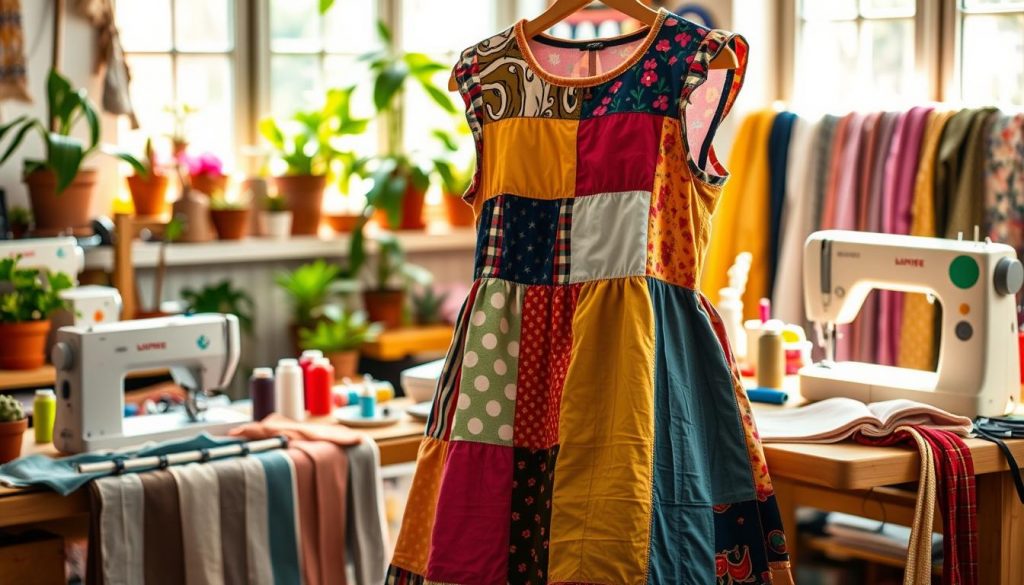
The Recycling of clothing is a crucial component of the modern textile industry. It encompasses the Recycling of textiles, to create new products from old materials. In this context, fiber-to-fiber fusion has become established.recycling It has been established as an innovative method to minimize environmental impact and maximize resource efficiency.
The Recycling process includes various methods such as mechanical and chemical recyclingWhile mechanical recycling generally consumes less energy and can be used for a wide variety of materials, it produces lower-quality fibers. In contrast, chemical recycling can transform polyester garments back into their original raw materials and produce high-quality recycled fibers.
- Natural fibers like cotton are generally easier to recycle than synthetic materials.
- Recycled polyester, especially from plastic waste, keeps plastic waste out of landfills.
- Almost 40% of the used clothing is exported as merchandise, while 40% to 45% of the used clothing is subject to downcycling.
- Less than 1% of all used clothing in the EU is successfully recycled into fibers.
The challenges in Recycling process The risks are diverse, particularly due to the use of blended fibers in many fast-fashion garments. Without suitable recycling methods, the majority of these materials will not be reused. The EU Green Deal aims to transform the textile industry sustainably.
For further information about the Recycling process and the Recycling of textiles It is advisable to gather comprehensive information. A detailed guide is available at this link. link available.
Upcycling techniques for old clothes
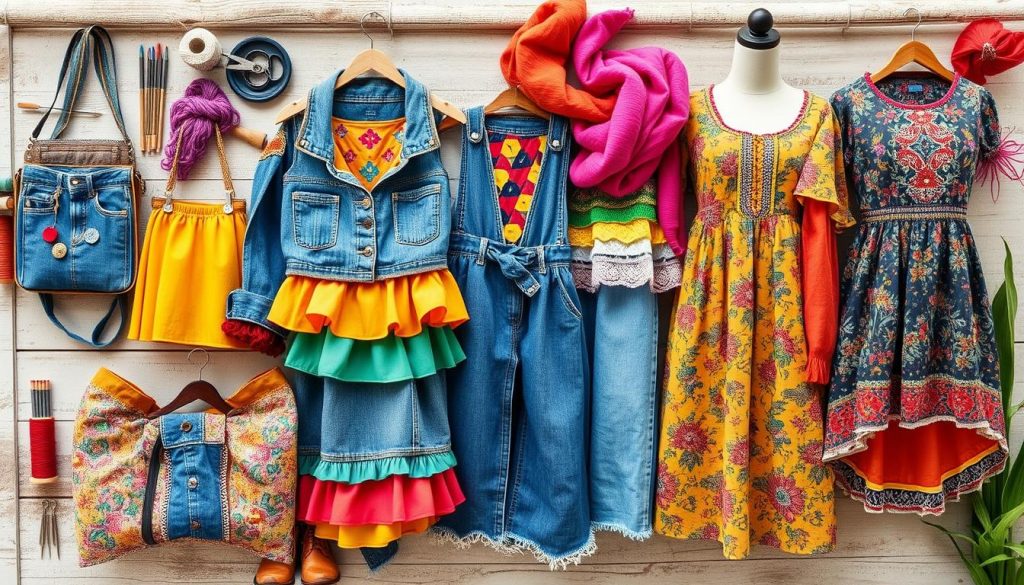
Upcycling techniques This opens up numerous possibilities to transform old clothes into something new and unique. creative textile design Worn-out shirts can be transformed into fashionable bags, or colorful blankets can be created from various fabric scraps using patchwork techniques. The variety of Fabric art This shows that even accessories made from vintage fabrics can deliver fantastic results.
Learning these techniques isn't just important for passionate hobbyists. Workshops and courses offer guidance that helps both beginners and experienced designers expand their skills. To further illustrate upcycling practices, here's an overview of innovative techniques:
| Technology | Description | Application |
|---|---|---|
| Bags made from T-shirts | Creating sturdy tote bags by cutting and sewing together T-shirts. | Shopping or as a fashion accessory. |
| Patchwork techniques | Combining differently patterned fabric scraps to create a new textile. | Blankets, pillowcases, or clothing. |
| Crochet and knitting techniques | Conversion of old fabrics into yarn, which is then used for new designs. | Crocheted or knitted garments. |
| Accessories made from vintage fabrics | Design of special pieces such as hairbands or jewelry. | Fashion accessories with individual character. |
Advantages of upcycling clothing
Upcycling clothing offers numerous advantages. Millions of tons of textiles end up in landfills every year. Upcycling promotes resource-saving practicesBy reducing the amount of textile waste in the fashion industry. Instead of using new raw materials, existing materials are creatively repurposed. This minimizes the need for new resources and conserves natural materials, which are often extracted under environmentally damaging conditions.
A key aspect of eco-friendly fashion is reducing carbon emissions. The production of new textiles, especially synthetic fibers, causes significant environmental damage. Upcycling can reduce this carbon footprint, as processing existing materials is generally less energy-intensive. This can make the fashion industry more sustainable.
- Protection of natural resources through reduced demand for new raw materials.
- Strengthening the local economy through jobs in the upcycling industry.
- Promoting creative and unique fashion pieces.
- Development of new business models, including repair services.
- Increased demand for sustainable fashion products.
Advanced techniques, such as digital embroidery, expand the possibilities of upcycling and lead to innovative designs. This results in a combination of materials that are both functional and aesthetically pleasing. One example of this is the brand Aatise, which uses surplus fabrics while simultaneously supporting the local economy.
The benefits of upcycling not only have a positive impact on the environment, but also give individual fashion pieces a new identity. Every upcycled garment often has its own story and retains parts of its original form, which increases its uniqueness and value. These aspects make upcycling an attractive and meaningful alternative in the fashion world.
Challenges in textile recycling
The Recycling challenges The challenges in the textile industry are diverse and complex. Immense quantities of clothing are produced worldwide each year, leading to significant textile recycling problems. In 2018, over 120 billion garments were manufactured, while the textile and apparel industry generated approximately 2.1 billion tons of waste. Unfortunately, 80 million tons of this waste end up in landfills or incinerators. In Germany alone, around 2 million tons of textiles are sold annually, resulting in an enormous amount of waste.
A key problem is the need for single-material construction, which is essential for efficient recycling. Blended fabrics made of cotton, polyester, and elastane make this more difficult. Recycling process Significant. Sometimes even high-quality garments made from single-material fibers are not optimally recycled. Advances in sorting technology, such as the use of infrared detectors and artificial intelligence, offer medical approaches for improvement.
Another point is that recycling textiles is often more expensive than producing new ones. This contributes to many companies choosing the more cost-effective option of discarding old garments and producing new ones. At the same time, 85% of all companies recognize sustainability as a strategic goal. Concern for environmental protection and sustainable practices should not be overshadowed by economic considerations.
In the future, the mandatory separate collection of textile waste, which the EU has introduced by 2025, could bring about a change in practice. This measure, together with planned recycling quotas, could help to significantly increase the recycling rate and the Textile recycling problems to mitigate. Innovative approaches and continuous research are crucial to reducing the Recycling challenges to be managed in the long term.
| Challenge | Description |
|---|---|
| High energy demand | The energy costs for textile recycling are often very high, which reduces efficiency. |
| Mixed fabric | The recyclability of materials is impaired by a variety of fiber mixtures. |
| Cost of recycled products | Recycled products are often more expensive to produce than new products, which can discourage companies from choosing environmentally sustainable alternatives. |
| Increasing textile waste | The amount of collected textiles is increasing, while their recyclability is decreasing due to poor recyclability. |
Upcycled clothing: Inspiration and ideas
Upcycling has become a fascinating trend, offering creative solutions for old clothes. More and more people are looking for individual ways to repurpose their garments. creative clothing to redesign. The variety of Upcycling ideas makes it easy to transform old textiles into something unique.
DIY projects DIY projects like transforming old shirts into bags or using jeans for patchwork are very popular. Such projects not only offer a sustainable alternative but also a fantastic way to express personality and creativity. Designing handbags and various accessories allows everyone to leave their own mark while also doing something good for the environment.
| project | Materials | Difficulty level | Time required |
|---|---|---|---|
| Old shirt to bag | Old shirt, scissors, sewing kit | Simply | 30 minutes |
| Denim patchwork blanket | Old jeans, sewing machine, stuffing material | Medium | 2 hours |
| T-shirt upcycling into pillowcases | Old T-shirt, scissors, sewing kit | Simply | 1 hour |
| Personalized tote bag | Vintage bags, iron-on designs | Simply | 20 minutes |
Providing tutorials and instructions for these projects has increased interest in DIY projects The trend has increased enormously. The use of iron-on designs, which are very popular in the crafting scene, allows everyone to personalize their own garment. Popular motifs are often inspired by nature, which reflects the growing trend towards Sustainability in fashion supports.
With a wide range of creative options, Upcycling For many, it's a cherished passion that focuses not only on environmental protection but also on the joy of creation. Personal expression through creative clothing It thus becomes a central element of this inspiring movement.
The role of the fashion industry in upcycling
The fashion industry plays a crucial role in Fashion industry upcycling and has the responsibility, sustainable practices to integrate. More and more brands are relying on sustainable fashion production, in order to cope with the enormous Influence of industry to counteract environmental impacts. A striking example is the rise in upcycling companies in the Netherlands, where the number increased from just 7 in 2013 to an impressive 140 in 2023. The trade association reports that the number of upcycling fashion companies has grown steadily in recent years and currently stands at least 33.
Consumers are showing a growing interest in alternative approaches. They are willing to repair or reuse clothing rather than replace it. This trend has encouraged companies to introduce reuse programs and better market upcycling. The fashion industry is challenged to move away from traditional production methods, as around 7.5 million tons of textile waste are generated annually in Europe.
| Year | Number of upcycling companies | Percent of consumers who are willing to repair |
|---|---|---|
| 2013 | 7 | N/A |
| 2023 | 140 | 40% |
The Influence of industry This is also reflected in the reduction of textile waste through upcycling. A large proportion of the material comes from surplus stock, which reduces energy consumption compared to conventional recycling methods. Consumers who choose upcycled products actively contribute to the circular economy and support brands that focus on this approach. sustainable fashion production This combination of innovation and consumer engagement could shape future trends and sustainably change the industry.
Conclusion
In summary, it can be said that the Conclusion on upcycling and recycling play a crucial role for the Future of fashion These methods offer solutions to the environmental challenges facing the fashion industry while simultaneously fostering creativity and individualized designs. By integrating these practices into their workflows, both consumers and designers can pave the way for sustainable fashion.
Despite the notable challenges in textile recycling, such as the low rate of less than 11 TP3T of all used clothing being processed into new fibers, progress, such as the use of 1001 TP3T of organic cotton by brands like SALZWASSER, shows that a shift in thinking is possible within the industry. Products made from recycled materials represent a step in the right direction and demonstrate that sustainable fashion is not only feasible but also appealing.
The increased adoption of upcycling and recycling can not only reduce the amount of textile waste generated annually, but also steer the entire industry in a more responsible and environmentally conscious direction. With a clear focus on sustainability and innovation, we find ourselves at the transition to a new era of fashion – one that respects the environment while simultaneously fostering individuality.
FAQ
What is the difference between upcycling and recycling?
Upcycling refers to the creative recycling from old materials to higher-value products, while recycling involves returning materials to the production cycle to obtain new raw materials.
Why is sustainability important in fashion?
Sustainability in fashion is crucial to mitigating the negative environmental impacts of the fast fashion industry and promoting responsible production practices.
What techniques are used in upcycling clothing?
Upcycling techniques include patchwork, appliqué, and textile printing, which deliver creative and appealing results.
What are the advantages of upcycling clothing?
Upcycling reduces textile waste, extends the life cycle of fabrics and promotes sustainable fashion through creative redesign.
What challenges exist in recycling textiles?
Challenges in textile recycling include the high energy demand, the need for single-material types, and the cost of the process.
How can I get creative with upcycling?
Inspiration for upcycling can be found through DIY projects, such as converting old shirts into bags or creatively designing accessories from vintage fabrics.
How does the fashion industry integrate upcycling into its practices?
The fashion industry is integrating upcycling through sustainable practices and training programs to raise awareness of environmental issues.
What role does the Fashion Design Institute in Düsseldorf play in upcycling?
The Fashion Design Institute in Düsseldorf teaches students the importance of upcycling and recycling in order to promote responsible and sustainable design practices.